
By Katie Tabeling, Delaware Business Times
NEWARK — George Hodges made the hour drive from south New Jersey and he knew he was in the right place at the right time and about to meet the right people.
He’s one of the co-founders of ARMAI Technologies, a financial tech company that builds artificial intelligence software to manage risk for banks. ARMAI already has one bank partner so it’s in the market to add more, but Hodges arrived at the Fintech Innovation Hub for a conference to help spread the word.
“I’ve been involved with fintechs since they called it that. You think New York, Silicon Valley and Atlanta have got a big payments presence. I mean, when I saw the sign on the building, ‘FinTech Innovation,’ I thought this is cool,” Hodges told the Delaware Business Times. “I never knew that Delaware was big for this.”
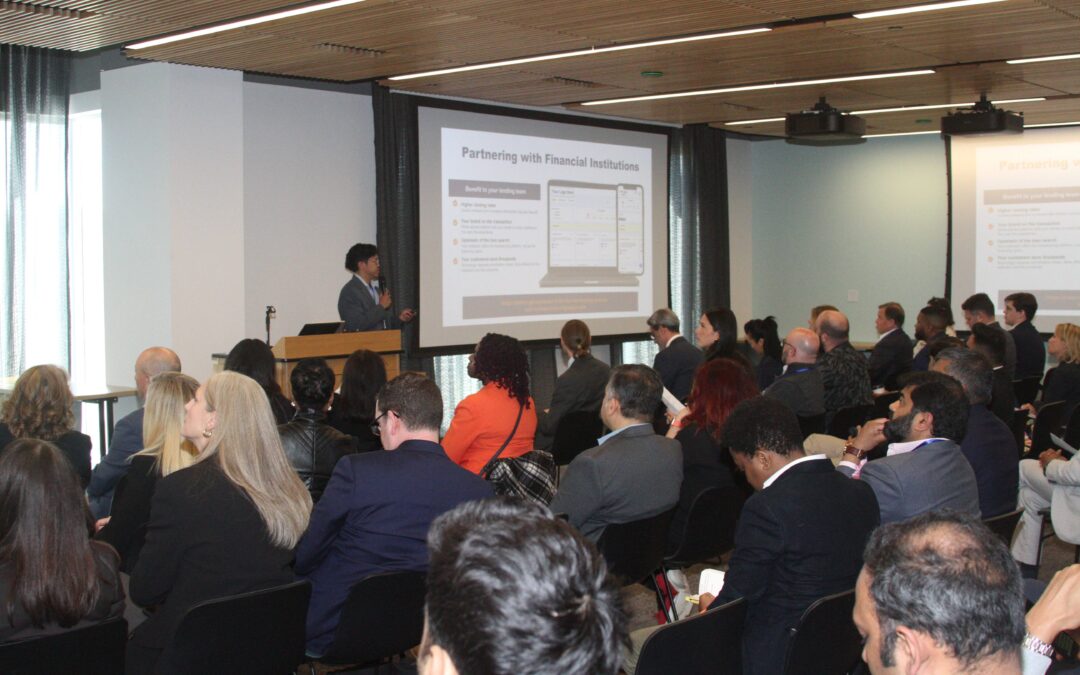
Hodges was one of hundreds of people who came to the Fintech Innovation Hub at the University of Delaware’s STAR Campus for the First State Innovation Conference on April 8. The event drew scores of people from higher education, investors, banks and financial institutions, as well as startup founders looking for capital.
Delaware already has a rich history in banking, largely credited to the boom of chartered banks thanks to the removal of caps on interest rates for commercial loans in the early 1980s. It’s attracted venerated firms like JPMorgan Chase and Bank of America along with loans and digital service companies like Ally Financial, Acorn, College Ave. and others.
Delaware economic development officials project that there’s nearly 48,000 jobs in the state’s broader financial services sector. Places like the Center for Accelerating Financial Equity (CAFE) aim to bring those on the forefront of the industry together to build a tight ecosystem in the state to see more fintech ideas become companies in their own right – or perhaps join in with another financial institution.
Take Best Egg’s $800 million deal with Barclays, for example. After 12 years in the business, Best Egg has helped facilitate $45 billion in loans, all of which were sold into capital markets. It was the third largest direct-to-consumer loan originator in the U.S. last year. The company had long aspired to build its own card product, but it turned out to be too capital and time intensive and the company was unable to scale deposits, Best Egg CEO Paul Ricci said.
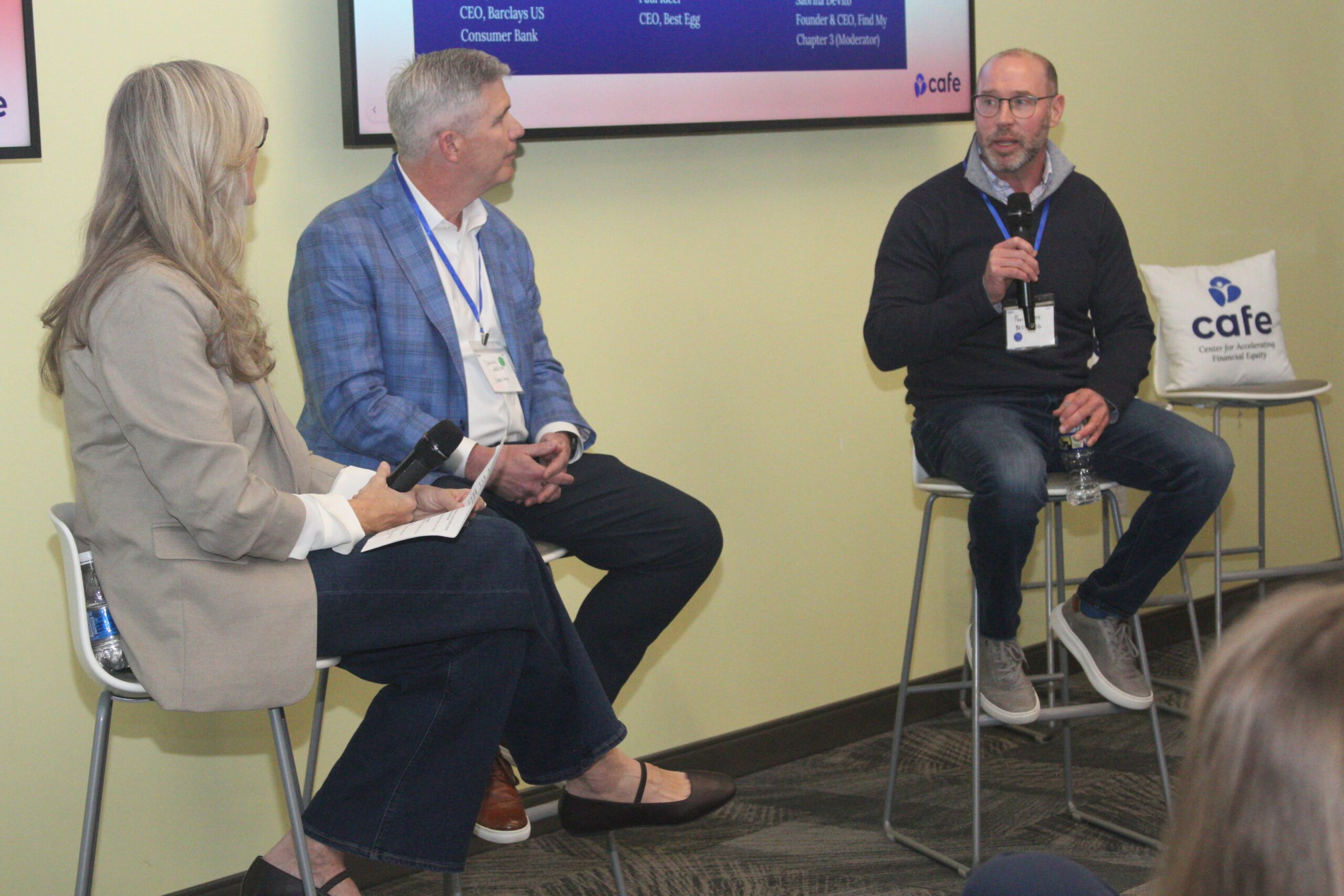
Best Egg Paul Ricci talked about what were the green flags when it came to considering a deal with Barclays in a fireside chat during the the First State Innovation Conference.
Barclays is a U.K.-headquartered bank which serves 25 million customers and has a strong foothold in the U.S. The bank had been exploring personal loans for a few years. Barclays U.S. Consumer Bank CEO Denny Nealon said the bank was looking to scale in Barclays but with a desire to scale fast, it would take a decade to reach Best Egg’s credit risk capability.
More fintech companies were becoming banks like SoFi and Lending Club and Ricci said that it’s making it harder to compete with the lost costs of credit for customers.
“I think the next thing that we’ll be looking forward to is that distribution point where, with the partners and the customer base that Denny has, are we able to deliver the personal product at scale into those opportunities,” he said.
In other ways, the conference served as a coaching session for both banks and fintech companies on what to think about when considering a deal — and when not to merge. One panel of fintech founders and banking executives stressed that purpose and profit must coexist, but one alone is not enough to make an idea work as a business tool or as a business plan.
Justin Dunn, WSFS Bank Chief Community Impact Officer, also cautioned that a partnership can be celebrated once the paperwork is signed, but it takes consistent work to make it operational and within regulatory compliance.
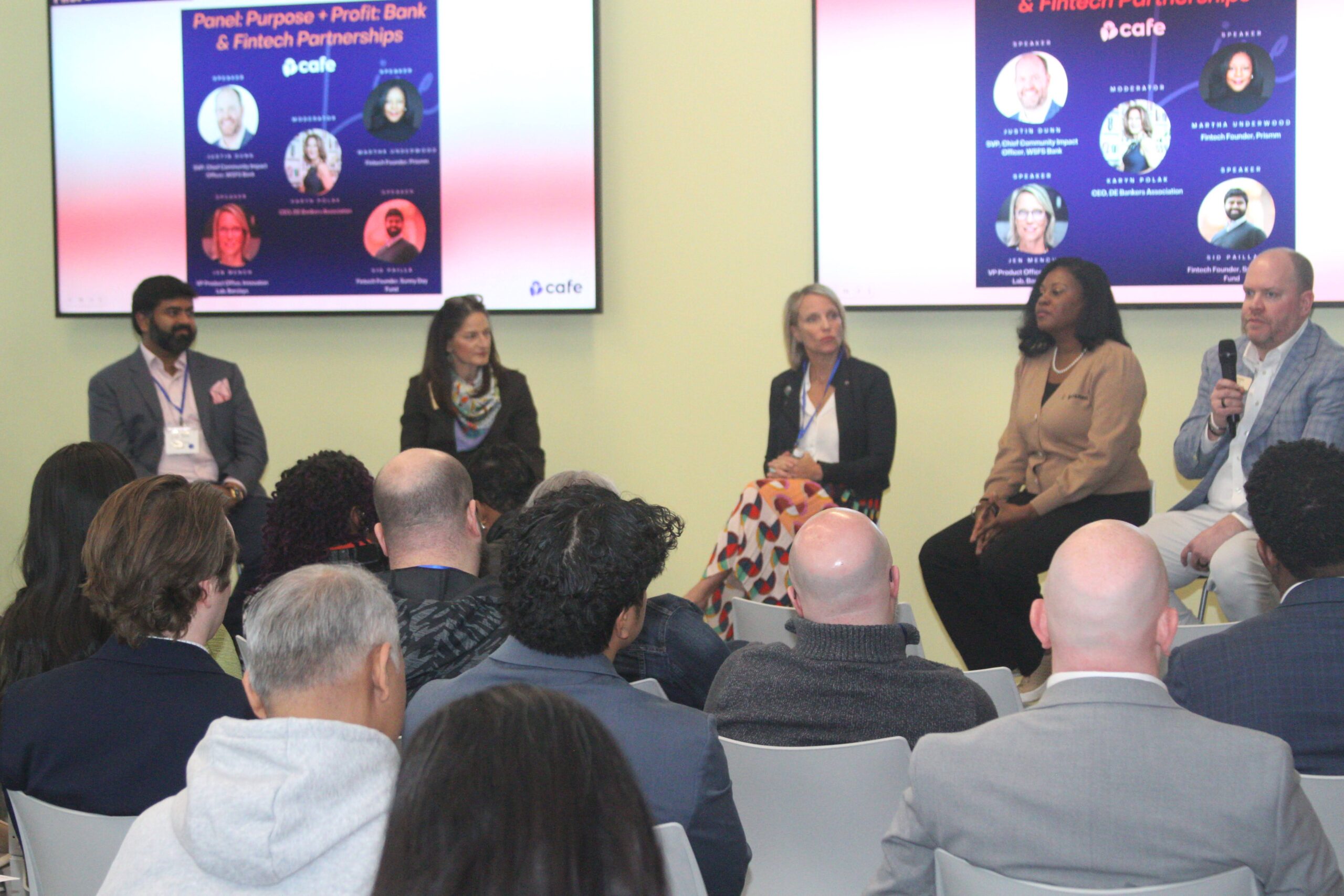
From left to right: Sid Pailla of Sunny Day Fund, Karyn Polak, the CEO of the Delaware Bankers Association, Innovation Lab Vice President of the Product Office Jen Mench, Prismm founder Martha Underwood and WSFS Bank Chief Community Impact Officer Justin Dunn speak on a panel about bringing purpose and profit together for fintech partnerships.
“You need to truly define what success looks like beyond the launch. It’s easy to get something to market, but once it’s there everyone moves onto the next priority,” Dunn said. “Who’s really owning it after that, on a day-to-day basis to make sure it’s successful?”
Later on in the day, the CAFE’s cohort of eight startup founders delivered pitches on their companies, all workshopped and developed an eight-week crash accelerator course there at the UD STAR Campus. Founders are chosen from all over the U.S. for their work on products to improve the lives of underserved and low-to-middle income residents, and at the Fintech Innovation Center, they are able to have access to top fintech developers and banking executives they likely would not have anywhere else.
Companies ranged from software to guide homebuyers through the process, saving $500,000 in commission fees; an AI toolkit for credit unions to give clients a full financial profile to guide them through financial products; a product that links to Health Saving Account or Family Saving Account to identify reimbursable expenses, and more.
Charles Potts watched the pitches, remembering when he was in the fintech founder’s shoes. He described the showcase as a graduation and marketing promotion all in one.
“This is really a chance to show what they’re doing, who they’re helping and potentially build new partnerships or connections. You got some capital communities watching this and seeing the quality of the opportunities here,” said Potts, the executive vice president of the American Fintech Council.
“All of them are viable partnerships and investments. Sometimes it’s a when, not an if,” he said.
Bridging the Gap: How Fintech is Enhancing Financial Equity
“It’s really important that they don’t stifle...

Delaware Technology Park: Building a Nexus of Innovation in Fintech, Life Sciences
As is so often the case in Delaware, the...

NAFC and CAFE Collaborate to Champion Fintech Innovation that Improves People’s Lives
FOR IMMEDIATE RELEASE August 4, 2025 Seattle, WA...